
“The death of a child is the greatest single blow the human body and spirit can endure.” ~ Dr. Lewis Thomas
There are some experiences in life that are so painful, so heartbreaking, that words never seem quite enough. The loss of a child is one of them.
Losing a child is undoubtedly one of the most devastating things a parent can experience. It goes against what we naturally expect from life and leaves a void that can never truly be filled.
The bond between a parent and child is one of the deepest connections we can have as human beings. Because of that, the grieving process is often incredibly complex, overwhelming, and difficult to put into words.
Edwin Shneidman once wrote:
“Mourning is one of the most profound human experiences that it is possible to have… the deep capacity to weep for the loss of a loved one and to continue to treasure the memory of that loss is one of our noblest human traits.”
Perhaps only another parent who has experienced this kind of loss can fully understand the depth of the pain and disbelief that follows. I’ve heard many bereaved parents describe grief not as something that gets better with time, but as something that changes. One person compared it to living with a splinter under your nail forever, you learn how to live with it, but you never stop being aware that it’s there.
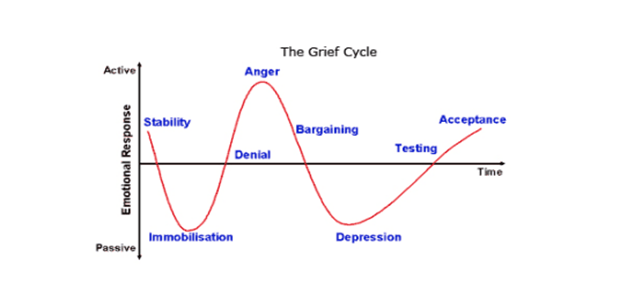
In 1969, psychiatrist Elisabeth Kübler-Ross introduced what became known as the Five Stages of Grief, a framework that describes some of the common emotional responses people experience after a significant loss.
You have probably heard of them before:
1. Denial: “This can’t be happening.”
2. Anger: “Why me? It’s not fair.”
3. Bargaining: “If only…”
4. Depression: “I’m so sad. What’s the point?”
5. Acceptance: “I may never like this, but I can learn to live with it.”
If you’re going through grief yourself, you might recognize some of these feelings. Or maybe you won’t, and that’s okay too.
One of the biggest misconceptions about grief is that these stages happen in order. In reality, grief doesn’t follow a schedule. You might move back and forth between emotions, experience several at the same time, or skip some altogether.
The value of this model isn’t that it perfectly explains grief. It’s that it helps us understand that what we’re feeling is human. It gives us language for emotions that often feel confusing and overwhelming.
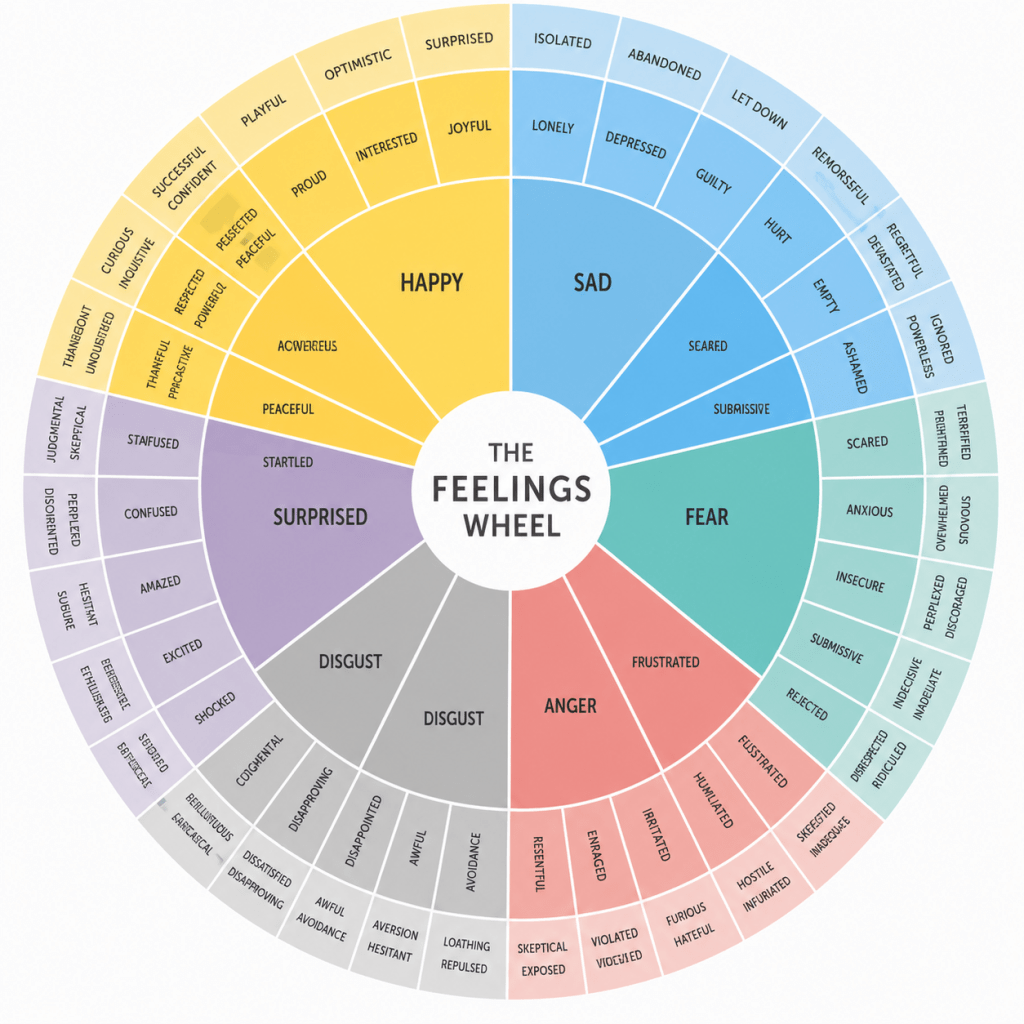
Speaking of finding the right words, I can’t talk about grief without mentioning another tool that many people find helpful: The Feelings Wheel.
Sometimes the hardest question to answer is, “How are you feeling?” We know we’re hurting, but we can’t always explain exactly what we’re experiencing.
The Feelings Wheel helps by breaking emotions down into more specific feelings. The inner circle contains primary emotions such as sadness, fear, anger, joy, peace, and power, while the outer rings provide more detailed emotional descriptions.
I’ve found that simply being able to name an emotion can sometimes make it feel a little less overwhelming.
Feelings Wheel image here:
Recently, I found myself trying to comfort one of my cousins after the loss of one of her adult children. Like many people in that situation, I struggled to find the right words. I was navigating my own shock while trying to support someone facing an unimaginable loss.
The experience reminded me that when someone is grieving, our presence often matters more than our words.
Here are a few things that can help, and a few things that are usually best avoided.
~ What You Can Say ~
Acknowledge the loss and express sincere sympathy.
- “I am so sorry for your loss.”
- “My heart is with you and your family.”
Let them know you’re there for them.
- “You don’t have to go through this alone.”
- “I’m here if you need someone to talk to or simply sit with you.”
Remember and honor their child.
- If you knew the child, share a kind memory.
- If you didn’t, you can say: “I know how deeply loved your child was, and I am thinking of you.”
When someone is grieving, simple and sincere is usually better than trying to find the perfect thing to say.
~What Not to Say~
- “Everything happens for a reason.”
Even when it’s well-intentioned, it can feel dismissive of the pain the person is experiencing.
2. “At least…” statements
Examples include:
- “At least they’re no longer suffering.”
- “At least you have other children.”
These comments can unintentionally minimize the loss.
- “I know exactly how you feel.”
Every person’s grief is unique. A more compassionate response might be:
“I can’t imagine how painful this must be, but I’m here for you.”
In general, try to avoid explaining the loss, searching for a silver lining, or rushing someone through their grief. Most grieving people don’t need answers, they need understanding.
Grief isn’t something we “get over.” It’s something we learn to carry. It’s the price we pay for loving someone deeply, and in many ways, it becomes part of our story.
If you’re grieving today, I hope you give yourself permission to feel whatever you’re feeling without judgment. And if you’re supporting someone who is grieving, remember that you don’t need perfect words. Sometimes the most meaningful thing you can offer is your presence.
To anyone carrying the weight of loss: may you find moments of peace, comfort in the people who care about you, and the strength to take each day one step at a time.
💙 I’d love to hear your thoughts or experiences in the comments. Sometimes sharing our stories reminds others that they are not alone.

Scire, P. (2007). Applying Grief Stages to Organizational Change.
 With A Grateful Heart by Chris Gil
Leave a comment