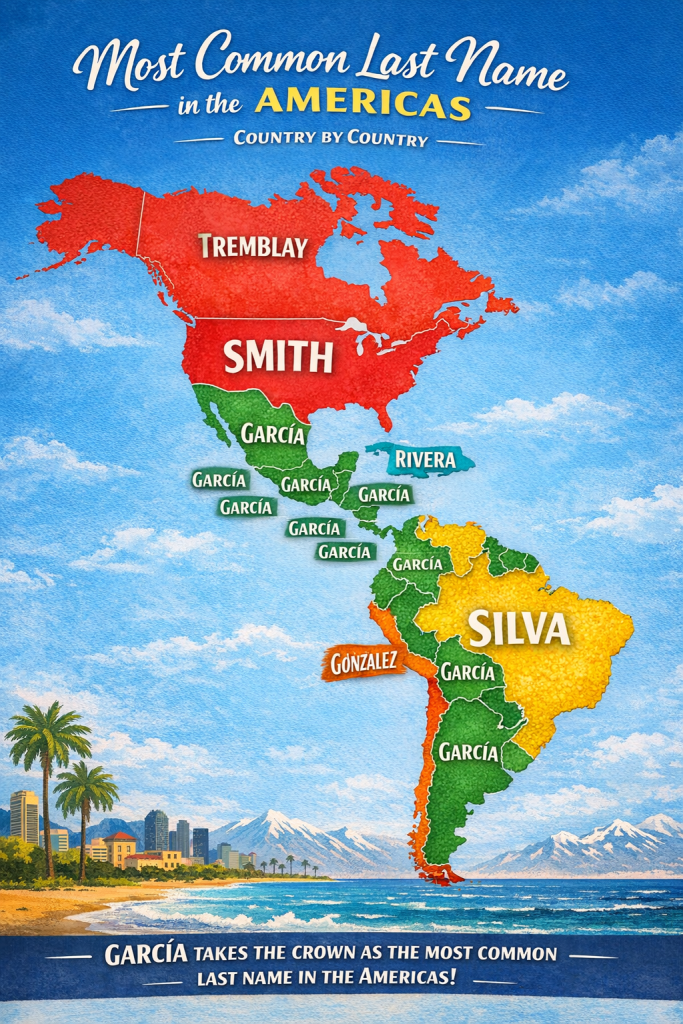
Have you ever filled out a form and realized there’s only space for one last name… but you have two?
Or maybe you’ve wondered why so many people from Spanish-speaking countries introduce themselves with two surnames. Is it romantic? Is it complicated? Is it both?
Let’s talk about it.
Where Do the Two Last Names Come From?
In most Spanish-speaking countries, a person traditionally receives:
- The first surname from their father
- The second surname from their mother
When people ask me about it, I like to say it’s our way of honoring both parents.
It sounds beautiful (and it is), but the historical reason is a little bit less romantic.
The Real History: It Started in Medieval Spain
This naming system dates back to Spain in the Middle Ages. As the population grew, it became harder to distinguish between people with the same first name. Imagine how many Marias, Juans, and Pedros there were!
To better identify individuals, people began adding surnames. For example:
- A Maria who worked with goats might be called Maria Cabrera (“Cabrera” relates to goats).
- Someone might be identified by where they lived.
- Others were named after their occupation or even a personal characteristic.
Over time, Spain formalized the use of both parents’ surnames for clearer identification, and the tradition spread to Latin America during colonization.
Types of Spanish Surnames
Like many European surnames, Spanish last names often fall into these categories:
- Toponymic – Based on where someone lived or came from.
- Occupational – Based on their job.
- Descriptive – Based on personality or physical traits.
- Patronymic/Matronymic – Meaning “son/daughter of” someone.
- Given surnames – Sometimes assigned to orphans.
This structure created a more precise way of identifying people, especially as societies grew.
What Happens After Marriage?
Here’s where it gets interesting.
In most Hispanic traditions:
- Both spouses keep their birth surnames after marriage.
- Children inherit the first surname of each parent.
That means our children carry:
- My father’s first surname.
- My husband’s father’s first surname.
I’ve experienced this confusion firsthand. Many times at airports or hotels in Europe and the U.S., staff looked for me under my husband’s last name and couldn’t find me. Why? Because I never changed it.
Here’s a modern twist from the motherland: since June 30, 2017, Spain allows parents to choose the order of their children’s surnames. The mother’s surname can now come first instead of automatically listing the father’s first. Parents must agree on the order, otherwise, the registrar decides.
In my opinion, this system doesn’t erase identity, it preserves it.
Why This Tradition Still Matters
Using two surnames does more than honor parents. It:
- Preserves both family legacies.
- Reflects heritage and social history.
- Creates clearer identification.
- Reinforces cultural identity.
The Hispanic tradition of using two surnames isn’t just paperwork, it’s history, family, and identity woven into a name.
And yes… it’s also a small rebellion against systems that only leave space for one last name.
Names connect us to our families, but they also connect us to entire cultures.
Hispanic naming traditions uniquely honor both parents, but around the world, naming systems vary, some emphasize the father’s surname, others the mother’s, and some follow completely different rules.
To give you a global perspective, here’s a world map showing the most common surname in each country.
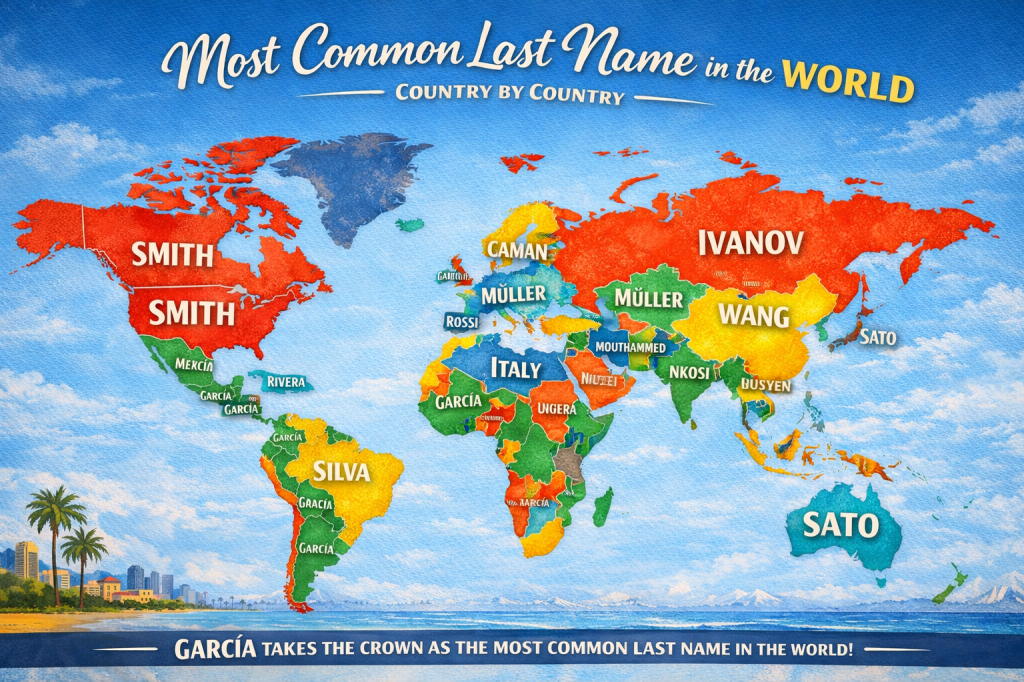
Which common surname surprised you the most? Do you have two last names, or have you ever been confused by forms? Share in the comments below!👇
 With A Grateful Heart by Chris Gil
Leave a comment